
🎯 Learning Objectives:
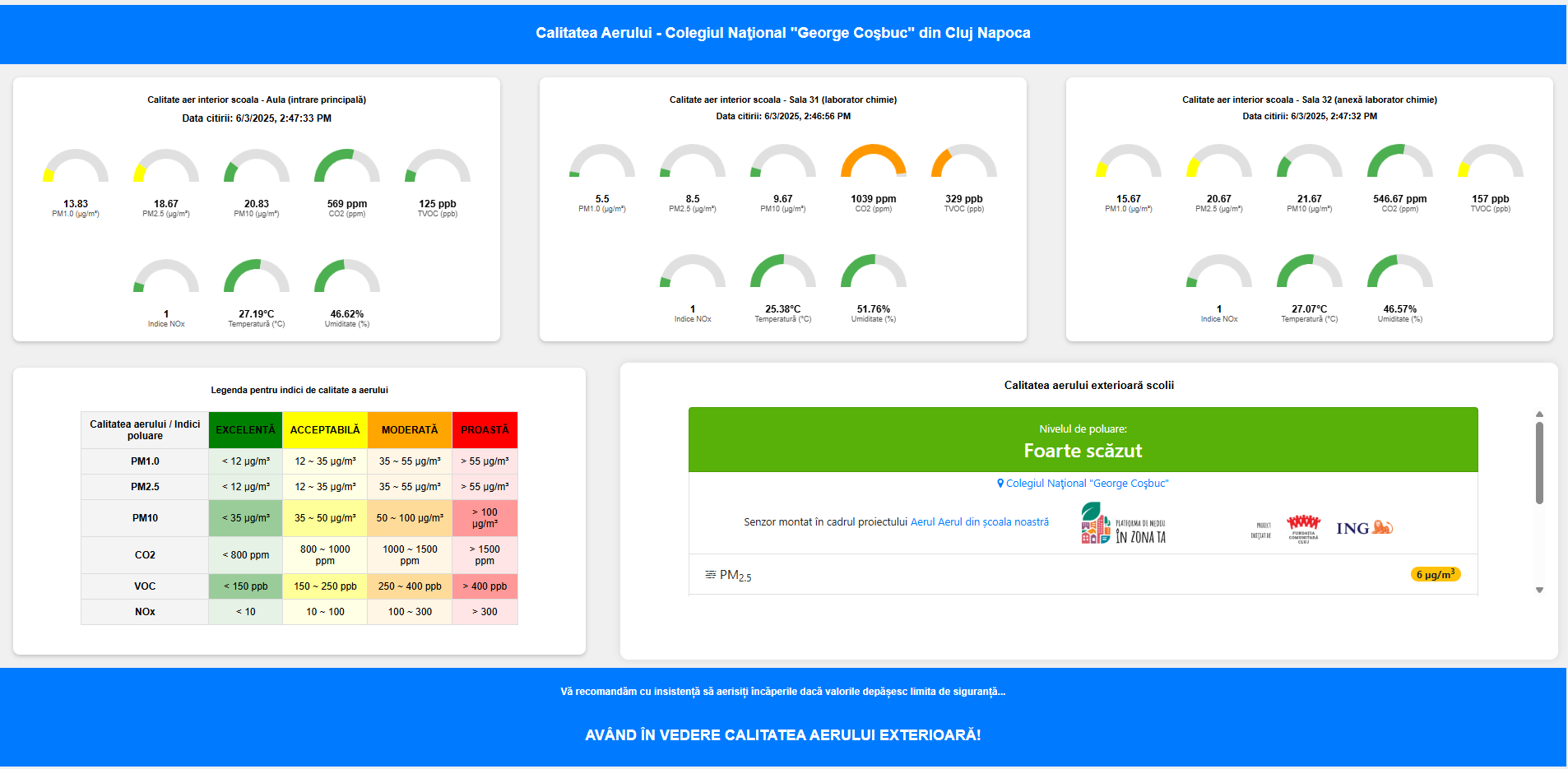
Students will learn how to read values from air sensors installed in their classroom or accessed online.
Understand measurement units and what defines safe vs. harmful levels.
📚 Lesson Content:
Units of measurement:
ppm (parts per million) – used for gases like CO₂
µg/m³ (micrograms per cubic meter) – used for particulate matter (PM)
Safe limit examples (WHO or national recommendations):
CO₂: optimal < 1000 ppm
PM2.5: safe < 15 µg/m³ (daily average)
How values are displayed: graph, LED indicator, or app interface (red = poor, green = good)
🧠 Fun fact: High PM2.5 levels in the morning can be caused by traffic or nearby wood-burning stoves.
🧩 Interactive Activity:
Real data analysis: Students receive a graph of CO₂ and PM2.5 values measured over a day in a classroom.
Questions: When is the CO₂ peak? What can be done to reduce it?
Alternatively: use live sensor data from their own school (if available).